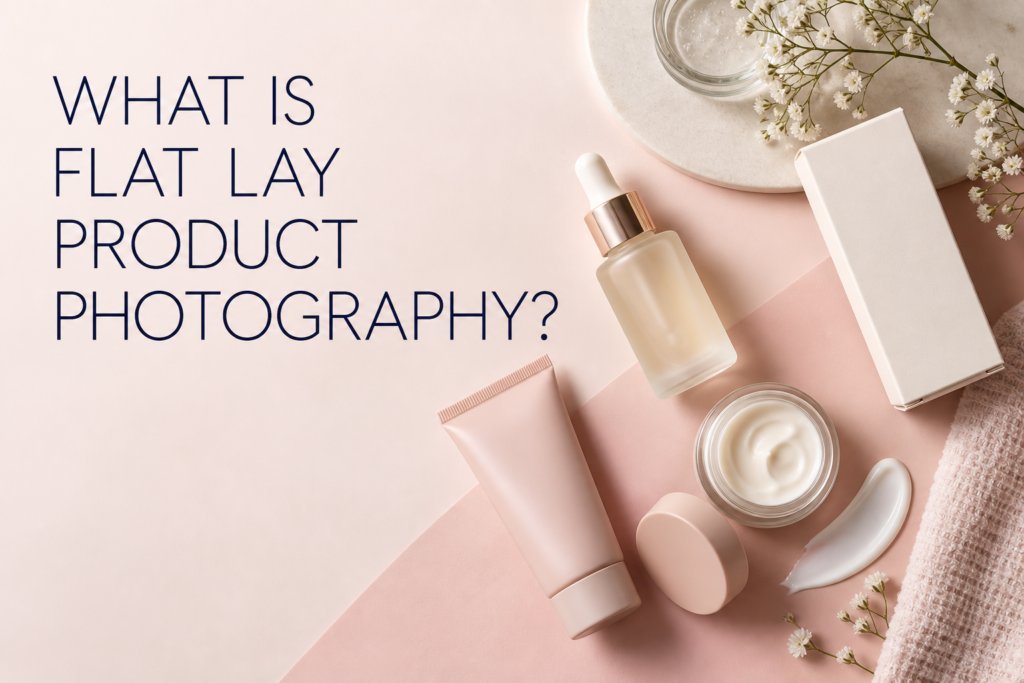
Flat lay product photography is an overhead image made with the camera facing down toward products arranged on a surface. It works especially well for small or relatively shallow items that can be understood from above, including skincare sets, cosmetics, jewelry, accessories, stationery, wellness packets, food products, and gift collections.
A successful flat lay is more than a group of objects placed on a table. The arrangement, spacing, shadows, background, props, and crop must guide the eye and make the products easy to identify. The format can be clean and informational or highly styled for a campaign.
What Is Flat Lay Product Photography?
A flat lay is photographed from a top-down viewpoint, usually close to a 90-degree angle. The product rests on a horizontal background while the camera looks directly toward it. This reduces visible depth and turns the composition into a graphic arrangement of shape, color, line, and negative space.
Because the image is organized on one plane, a flat lay can show several related items clearly without the overlaps common in front-facing group shots. It can also reveal packaging fronts, formula swatches, accessories, or ingredients in one coordinated frame.
Which Products Suit a Flat Lay?
Products suit a flat lay when their important shape, label, color, or relationship to other items is visible from above. Small and medium items are generally easier to arrange than tall objects, but the final decision depends on packaging design and image purpose.
Beauty and skincare products
Jars, compacts, tubes, sheet masks, droppers, palettes, pencils, brushes, and small bottles can form clear overhead compositions. A flat lay can show a complete routine, a product family, a travel set, or a formula-and-packaging story.
Cosmetics and color products
Lip products, eye palettes, nail polish, brushes, and swatches benefit from the graphic viewpoint. Open and closed packages can be combined to show both brand design and the usable color or applicator.
Jewelry and accessories
Necklaces, earrings, watches, hair accessories, small leather goods, and coordinated sets can be arranged to make size and relationships visible. Reflective materials require controlled lighting so the overhead image does not show the camera or room.
Wellness, food, and packaged goods
Packets, bars, supplements, tins, tea, snacks, and gift boxes often photograph well from above. The format can organize multiple flavors or components while keeping front labels readable.
Stationery and small lifestyle items
Notebooks, cards, pens, art supplies, candles, textiles, and tabletop goods can work when their design is visible on the upper surface. A hand or contextual object may help explain use or scale.
Which Products Are Harder to Photograph as Flat Lays?
Tall bottles, objects whose defining feature is on the side, and products that rely on depth or silhouette may look shortened or ambiguous from above. A cylindrical bottle viewed only from the top may become a circle with little recognizable information.
These items can still appear in a flat lay as supporting elements or be positioned on their side, but the gallery should also include a front or three-quarter view. A studio product photography plan can combine overhead compositions with the angles that best describe each package.
What Is the Difference Between a Flat Lay and an Overhead Pack Shot?
The terms overlap, but they can describe different levels of styling. An overhead pack shot is usually a straightforward top view intended to document the product accurately. A flat lay often refers to a composed scene with several items, props, textures, or a visual story.
- Overhead pack shot: product-focused, consistent, simple, and useful for comparison.
- Styled flat lay: art-directed arrangement designed for a campaign, collection, or brand story.
- Lifestyle flat lay: products shown with contextual objects that suggest a routine, setting, or user.
Any of these can be appropriate for e-commerce. The image’s job should determine the amount of styling.
Why Do Brands Use Flat Lay Product Photos?
Flat lays can present multiple products in a compact, orderly frame. They are useful for showing collections, routines, kits, ingredients, shade families, or product pairings. The overhead viewpoint also adapts well to square and vertical formats used on product pages, email, advertising, and social platforms.
The layout can create visual consistency across many SKUs. Repeating the same background and spacing for each set allows shoppers to compare products while keeping the brand presentation cohesive.
How Do You Plan a Flat Lay Composition?
Start with the main subject and intended crop. Place the most important product first, then add supporting items in order of importance. Use spacing, direction, and repetition to move the eye through the frame.
Choose a visual structure
A grid feels orderly and works well for collections. A diagonal arrangement creates movement. A circular layout can connect products around a central idea. An intentionally scattered composition can feel casual, but it still needs controlled balance.
Protect label readability
Rotate products so key labels can be read without forcing the viewer to turn the page mentally. If multiple packages point in different directions, choose a clear anchor product and make the variation purposeful.
Use negative space
Empty areas prevent the scene from feeling crowded and may provide room for headlines, prices, or interface elements. Plan this space during capture instead of assuming the product can be moved easily after retouching.
Control overlap
Overlap can create depth, but it should not hide the product name, shade, closure, or distinctive shape. Small risers may introduce subtle height while preserving the overhead viewpoint.
What Background Works Best for a Flat Lay?
The best background supports the product color and intended use. White and soft neutrals create clarity. Brand colors can build recognition. Paper, stone, acrylic, fabric, tile, and painted surfaces can introduce texture when that texture does not compete with small packaging details.
Contrast matters. A pale package may disappear on a bright background, while a reflective black object can lose its edge on dark material. Review how to choose a product photography background before locking the palette.
Should a Flat Lay Include Props?
Props should explain context, support scale, reinforce an approved ingredient story, or improve composition. They should not make the product harder to find. A skincare image might include an applicator, towel edge, approved botanical element, or controlled formula texture. A gift set might include its box, ribbon, or card.
Use restraint when the products already create enough shape and color. One relevant prop is usually more useful than several decorative objects with no relationship to the item.
How Is a Flat Lay Lit?
Broad soft light creates even color and gentle shadows, which works well for clear e-commerce images. Directional light can create longer shadows and a more graphic campaign look. The light should preserve texture without causing glare across glossy labels or metallic packages.
Products at different heights cast different shadows, so spacing needs to account for the chosen light direction. Reflective caps, mirrors, and glass may need individually shaped highlights or careful retouching. Color references help keep backgrounds and packaging consistent across a series.
How Can Flat Lays Be Used on E-Commerce Pages?
A flat lay can show what is included in a kit, connect products in a routine, display a shade range, or present packaging components. It should complement primary product-only images rather than replace views that show height, depth, or side details.
For an e-commerce photography gallery, a useful sequence may begin with a clean front image, add alternate angles and details, then use the flat lay to explain relationships between items.
How Should Flat Lays Be Cropped for Websites and Social Media?
Plan the largest required crop before arranging the products. Square images are common for galleries and feeds, vertical crops work for stories and mobile placements, and wide crops may be needed for banners. Keep important products and labels away from unsafe edges.
If one setup must serve several formats, capture alternate arrangements instead of relying on aggressive cropping. A wider master image can help, but products may appear too small in a vertical version unless the composition is adjusted.
Flat Lay Shot-List Checklist
- Final placement and aspect ratios
- Main product and supporting items
- Open, closed, or dispensed product states
- Background color and surface texture
- Approved props, ingredients, or formula textures
- Label direction and required readable details
- Shadow style and lighting mood
- Negative space for copy or interface elements
- Square, vertical, and horizontal variations
Common Flat Lay Photography Mistakes
- Including too many objects without a clear focal point
- Using props that imply an inaccurate ingredient or benefit
- Turning labels in inconsistent directions
- Letting products disappear into a similar background color
- Ignoring glare on glossy packaging and mirrors
- Placing key items too close to crop edges
- Using an overhead view when the product’s important features are on its side
Frequently Asked Questions
Does a flat lay have to be photographed at exactly 90 degrees?
No, but a near-vertical camera position creates the familiar flat graphic look. A slight angle can reveal depth, though it begins to read more like an elevated product scene.
Can tall bottles be used in a flat lay?
Yes, often placed on their side or combined with shorter items. Include another image that clearly shows the bottle’s upright shape and front label.
Are flat lays only for social media?
No. They can support product pages, collection pages, email, advertising, editorial layouts, sales materials, and retail presentations.
Can one flat lay show an entire product routine?
Yes, if the order and relationship are easy to understand. Keep the number of products manageable and use composition or numbering in page copy to explain the sequence.
To plan an overhead collection, routine, or campaign image for your brand, contact Picture Your Products about professional product photography and videography for e-commerce and marketing.