
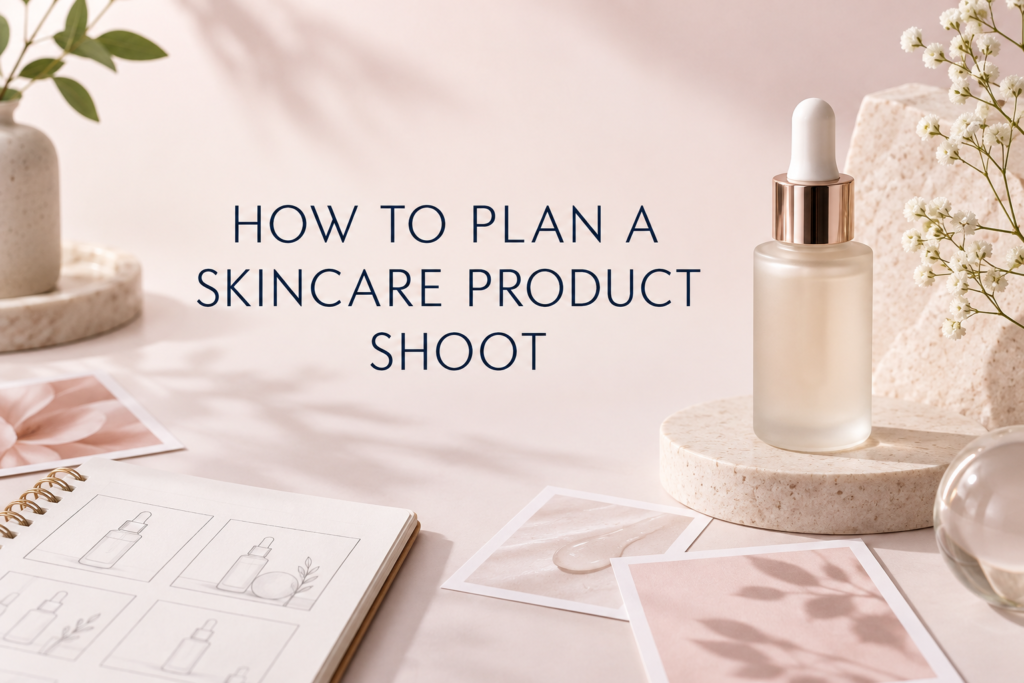
Plan a skincare product shoot by working backward from the channels where the images will appear. List every SKU, product variation, packaging component, required crop, and buyer question before choosing props or backgrounds. This turns a mood board into a production plan.
Skincare imagery must often communicate packaging, texture, application, routine, and brand atmosphere within one coordinated library. Early decisions about preparation, shot order, materials, and deliverables prevent expensive resets.
What should the brief include?
Define the launch, audience, product claims that can be shown, visual references, usage channels, and final delivery needs. Separate required e-commerce images from campaign concepts so essential coverage is never displaced by experimentation.
Build the SKU and packaging inventory
Record product names, sizes, shades, scents, cartons, inserts, applicators, caps, seals, and collection groupings. Identify hero SKUs and variations that can share lighting. Send backup units when possible because fingerprints, scratched caps, bent cartons, and leaking formulas can slow production.
Which skincare images belong on the shot list?
- Front-facing product and packaging
- Side, back, open, and closed views when informative
- Applicator, closure, pump, dropper, or label details
- Texture swatches and formula movement
- Single-product and collection hero images
- Scale, hand, routine, or lifestyle context
- Horizontal, square, and vertical crops required by real placements
See the e-commerce photography service for clean product-page coverage and the studio photography service for styled imagery.
How should you choose a visual direction?
Translate the brand into concrete choices: hard or soft light, matte or reflective surfaces, warm or cool color, minimal or layered styling, and clinical or sensory mood. A useful reference explains what to borrow—palette, shadow quality, crop, or material—not simply what to copy.
Plan texture and ingredient imagery carefully
Decide which formulas need drops, smears, swatches, peaks, bubbles, or translucency. Confirm whether an ingredient belongs in the formula before using it as a prop. Prepare replacement product for texture work because opened formulas may not return to pristine packaging.
What happens before shoot day?
- Approve the shot list and priorities.
- Confirm products have arrived and are undamaged.
- Test reflective, transparent, or difficult packaging.
- Prepare backgrounds, surfaces, props, and color references.
- Label products and sequence setups to reduce unnecessary resets.
- Confirm review, retouching, and delivery expectations.
How do you plan crops without duplicating every shot?
Create safe negative space around selected hero compositions and identify the primary crop before shooting. A wide banner cannot always be recovered from a tight square. Some concepts should be produced specifically for vertical social placements or mobile screens.
Common planning mistakes
- Requesting “a mix” without assigning an image purpose
- Forgetting cartons, applicators, or size variants
- Using props that suggest unsupported ingredients
- Ignoring reflective finishes until the shoot begins
- Expecting one composition to fit every crop
Frequently asked questions
How far ahead should a skincare shoot be planned?
Allow enough time for product shipping, approvals, tests, production, selection, and retouching. The exact schedule depends on scope and complexity.
Do all products need lifestyle images?
No. Prioritize imagery that answers real shopper questions and supports confirmed placements.
Should the brief include competitor images?
References can clarify expectations, but the goal should be a distinctive visual system rather than a close imitation.
Work with Picture Your Products
Picture Your Products creates product, e-commerce, beauty, skincare, and lifestyle imagery for Chicago and remote product-shipping projects. Contact the studio to plan a shoot around your products and sales channels.