
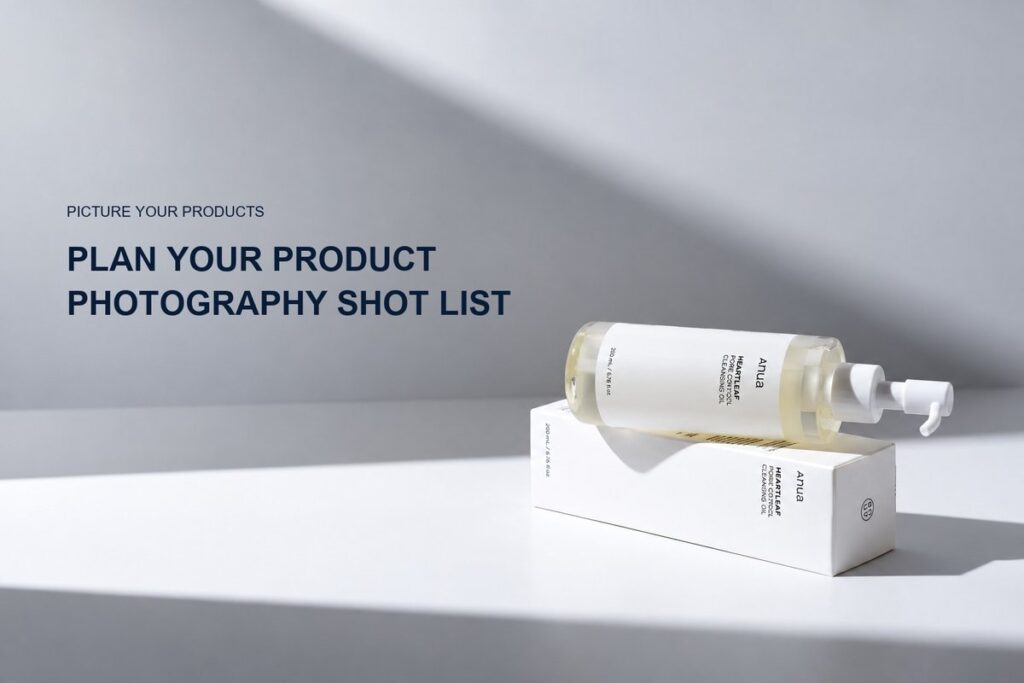
A complete product photography shot list is a written plan that connects every image from a shoot to a specific sales or marketing need. Instead of choosing an arbitrary number of photos, start with the places the product will appear: the product page, collection page, marketplace listing, launch campaign, email, paid advertising, and social media. Then list the views, details, formats, and variations required for each channel.
This approach prevents a common problem: finishing a beautiful shoot and discovering that the team still lacks a clean side view, packaging detail, vertical ad crop, or image that explains scale. A useful shot list is not simply a list of camera angles. It is a production map for the content the business expects to publish.
What should a product photography shot list include?
A product photography shot list should identify the product or SKU, image purpose, shot type, angle, orientation, background, styling notes, props, required variations, and intended channel. It should also distinguish essential images from optional creative concepts.
At minimum, record these details for every planned image:
- Product name, size, shade, scent, or other variation
- Primary purpose, such as product page, category page, ad, or social post
- Shot type: individual, group, detail, scale, texture, packaging, or lifestyle
- Camera angle and crop
- Background and surface
- Product position, label direction, and cap or closure position
- Props, ingredients, hands, or supporting objects
- Horizontal, vertical, square, or multiple crops
- Retouching notes and file-delivery requirements
Keeping these decisions in one document gives the photographer, stylist, designer, and marketing team the same reference point.
Start with the places where the images will be used
The most reliable way to plan a shoot is to work backward from placement. A hero image for a website banner needs different negative space and proportions than a square marketplace image. An email header may need room for copy, while a product-detail image must keep the product large enough to examine on a phone.
What does the product page need?
Most product pages need a clean primary image plus supporting views that answer questions the shopper cannot resolve in person. Depending on the item, that can include the front, back, side, open packaging, applicator, texture, scale, and a styled use-context image.
For a skincare serum, for example, the plan might include a front-facing bottle, the carton and bottle together, a three-quarter angle, the dropper removed, a macro of the applicator, one measured drop, a texture smear, and a contextual vanity image. An e-commerce photography plan should prioritize consistency and clarity across the full catalog.
What does the marketing calendar need?
Review the next launch, promotion, season, and campaign before the shoot. A brand may need a launch announcement, ingredient story, bundle image, paid-social concept, retailer graphic, and evergreen educational post. Capturing them together can create a coherent visual family, provided each composition is planned rather than treated as an afterthought.
Separate essential images from campaign images
Divide the list into two groups. Essential commerce images explain what the customer receives. Campaign images build mood, identity, and attention. Both matter, but they solve different problems.
Essential images often include:
- A clean primary product view
- Additional angles
- Packaging and included components
- Important labels or functional details
- Scale or size reference
- Color and finish variations
Campaign images may include:
- A styled hero composition
- An ingredient-led concept
- A texture-focused scene
- A seasonal or launch-specific setup
- A composition with negative space for advertising copy
Picture Your Products offers both studio product photography and clean catalog imagery, so a brief can cover both groups while keeping their objectives clear.
How do you choose the right angles?
Choose an angle because it communicates information, not merely because it looks different. A front view identifies the product. A three-quarter view explains depth. A side or back view may reveal instructions, closures, controls, or packaging construction. An overhead view is useful for kits, flat lays, and arrangements. A low angle can give a hero shot more presence, but it may be less informative for commerce.
Ask what a shopper would inspect if the product were in their hands. For cosmetics, that may be the wand, pan, shade, closure, and finish. For wellness packaging, it may be the label panel, serving information, seal, and container scale. Photograph the surfaces and mechanisms that influence the purchase decision.
Plan variations and product readiness
List every variation that genuinely needs its own image. Shade-dependent cosmetics usually require accurate individual views. A skincare line with identical packaging but different labels may need both consistent singles and a group image. If one photograph can represent several options without confusing the customer, note that decision explicitly.
Prepare backup units whenever possible. Select clean packaging, confirm that labels are straight, remove price stickers, and identify products that must remain sealed. Texture products may require separate units for pristine packaging and application shots. The shoot plan should also state whether cartons, inserts, accessories, or outer shipping materials belong in frame.
How should crops and negative space be planned?
Do not assume one crop will fit every platform. Record the required aspect ratios before production. A horizontal website banner, square store tile, vertical story, and portrait ad can sometimes come from one flexible setup, but only if the composition leaves safe space around the product.
When text will be added later, specify where the negative space should appear. Also tell the photographer whether the layout may flip or whether label orientation makes that impossible. Planning delivery sizes helps avoid aggressive crops that cut off shadows, reflections, or supporting props.
How many shots should be on the list?
There is no universal number. The correct total depends on product complexity, number of variants, sales channels, and campaign goals. A simple boxed item may need fewer views than a cosmetic kit with several components and textures. Count deliverables by purpose and variation, then confirm which setups can efficiently create multiple final images.
A good test is to review the list as a shopper, a designer, and a marketer. Can the shopper understand the item? Can the designer build every planned page and ad? Does marketing have enough variety to avoid repeating one photograph everywhere? If any answer is no, the list needs another shot or format.
A practical shot-list review before production
- Confirm the products, variants, and backup units.
- Match every essential image to a product-page question.
- Match campaign images to specific placements.
- Confirm backgrounds, props, textures, and styling direction.
- List required aspect ratios and negative-space preferences.
- Mark must-have shots separately from optional ideas.
- Check label accuracy, packaging condition, and shipping timing.
- Approve the list with everyone who will use the content.
This final review reduces uncertainty on shoot day and makes feedback more specific.
Frequently asked questions
Should the photographer help build the shot list?
Yes. The brand should explain products, audiences, and placements; the photographer can translate those needs into efficient setups, angles, and crops.
Is a mood board the same as a shot list?
No. A mood board communicates visual direction. A shot list records the exact deliverables. The two documents should support each other.
Can one setup create several deliverables?
Often, yes. A carefully planned setup may support multiple crops or small composition changes, but those outputs should be identified before the shoot.
When should the shot list be approved?
Approve it before products, props, and backgrounds are finalized, allowing enough time to resolve missing items or unclear requirements.
If your brand needs a practical shot list and professional production, contact Picture Your Products to discuss photography, video, and the channels your content must support.